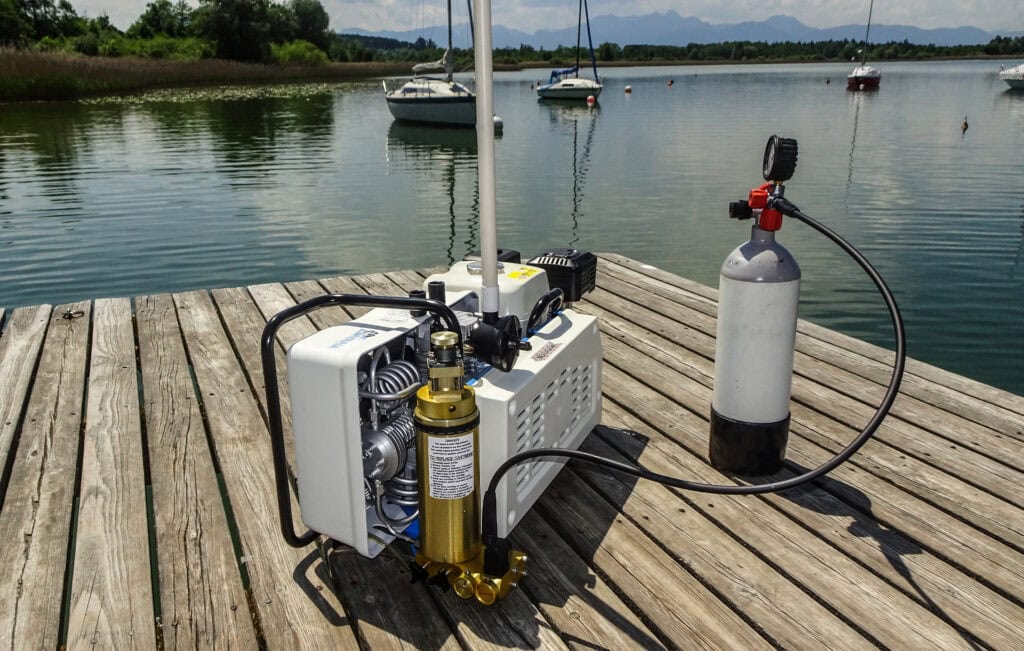



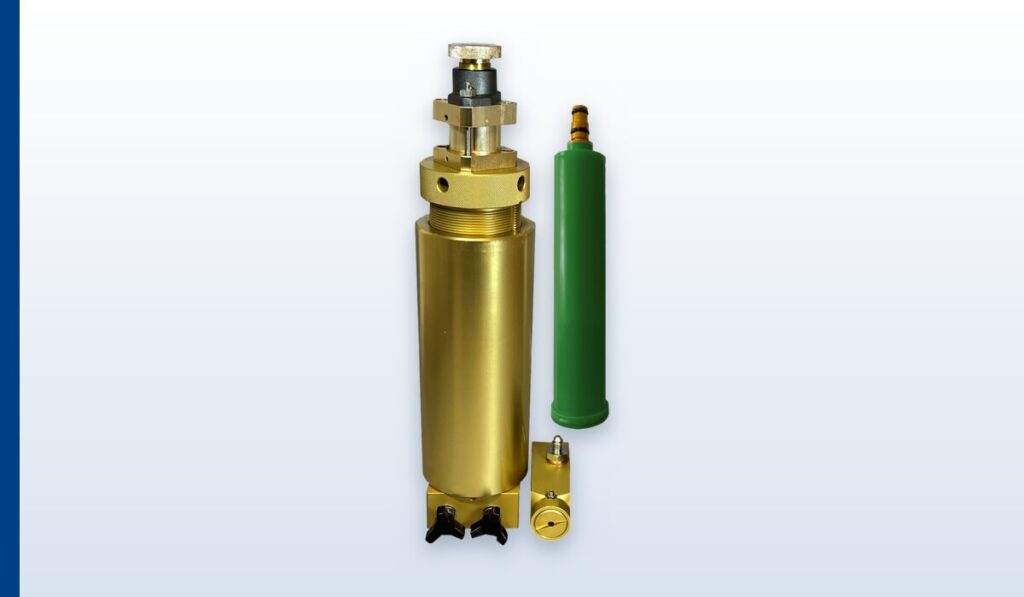
A molecular sieve is a fine-pored desiccant granulate (zeolite) that removes residual moisture from the compressed air in breathing air and compressed air compressors. It is located in the dryer cartridge of the filter stage and must be replaced regularly depending on usage.
Why molecular sieve is important in compressors
Restfeuchtigkeit in der Atemluft ist eines der Kriterien, das eine gute Luftqualitätsüberwachung wie IDE-Airsave laufend misst. Zu feuchte Luft kann Korrosion in Flaschen und Ventilen verursachen und die Atemluftqualität nach DIN EN 12021:2014 gefährden – das Molekularsieb ist die Stufe, die genau das verhindert.
When does the molecular sieve need to be replaced?
Over time, the granulate becomes saturated with moisture and loses its drying effect – the replacement cycle depends on the frequency of use, ambient humidity, and compressor runtime. IDE supplies the matching molecular sieve granules directly as a spare part from the manufacturer.
Frequently Asked Questions
What is a molecular sieve?
A molecular sieve is a porous desiccant granulate (zeolite) that binds water molecules from compressed air, thereby ensuring dry, clean breathing air.
How often does the molecular sieve need to be replaced?
That depends on the frequency of use and ambient humidity – saturated granulate loses its drying effect and should be replaced before air quality suffers.
Where can I find replacement molecular sieve for my IDE compressor?
IDE offers molecular sieve granules as well as complete dryer cartridges as spare parts directly from the manufacturer.
Usually, a preceding one works Condensate trap, which captures coarse moisture even before fine drying. Questions about the appropriate maintenance of your compressor? We are happy to advise you.
More contributions:
Hydrotests und Druckbehälterprüfungen bis 1000 bar
Learn more to Hydrotests und Druckbehälterprüfungen bis 1000 bar
Atemluft-Füllanlage betreiben: Pflichten nach TRBS 3145 und TRGS 745, Grenzwerte nach DIN EN 12021
Learn more to Atemluft-Füllanlage betreiben: Pflichten nach TRBS 3145 und TRGS 745, Grenzwerte nach DIN EN 12021